|
THE MANPOWER REPORT |
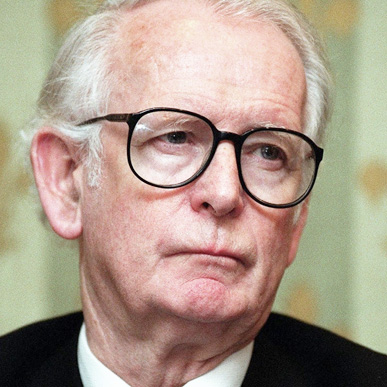
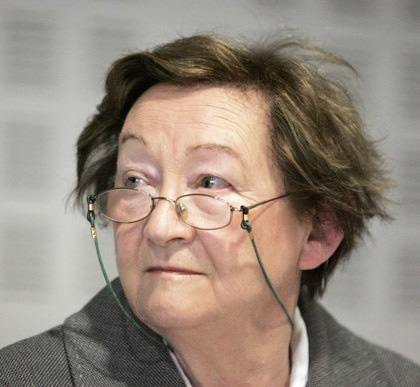
So, here we are at a meeting of the National Economic and Social Council (NESC) with P�draig � hUig�nn (left) in the chair.
We are discussing the Council's Report on Manpower Policy in Ireland.
Sylvia Meehan (right), Chairperson & CEO of the Employment Equality Agency, intervened to question the appropriateness of the term MANPOWER. You can figure out yourself where she was coming from.
There followed a discussion on the appropriateness or otherwise of the term which went round and round for about a quarter of an hour.
The first language to be invoked was Irish, where there was no problem about the equivalent term, DAONCHUMHACHT, but its English equivalent PEOPLE POWER had been appropriated by the hippies or anti-establishment demonstrators and had a serious smell of FLOWER POWER about it which made it seriously unsuitable for the title of the NESC report.
P�draig, being the renaissance man he was, resorted to the then accepted universal language of diplomacy, LANGUE ET CIVILISATION FRAN�AISE, and argued that the MAN in MANPOWER wasn't a MAN at all but merely an androgenous HAND. The term in French was MAIN D'OEUVRE. We had it in English in the term MANUFACTURE. Made by hand.
But the boul Sylvia was made of sterner stuff and would not be put off by this foreign frippery. She was not amused and would not accept the term MANPOWER under any circumstances.
It was at this point, that P�draig took out his blunderbuss and pointed it straight at Sylvia - MANPOWER was an international term, accepted by the OECD, which had a particular meaning/definition and departing from it in this context would lead to irreparable confusion.
Sylvia, by then, knew the game was up and determined to live to fight another day.
The report when finally published, as Report 82 in December 1985, contained the following paragraph in the Introduction:
